
What Is the Best Metal for Grating? A Complete Guide to Carbon Steel, Stainless Steel & Aluminum
Unsure which metal suits your grating project? Compare carbon steel, galvanized steel, 304/316 stainless steel & aluminum by durability, cost & use case for optimal industrial, outdoor & hygienic applications.
tonybuy
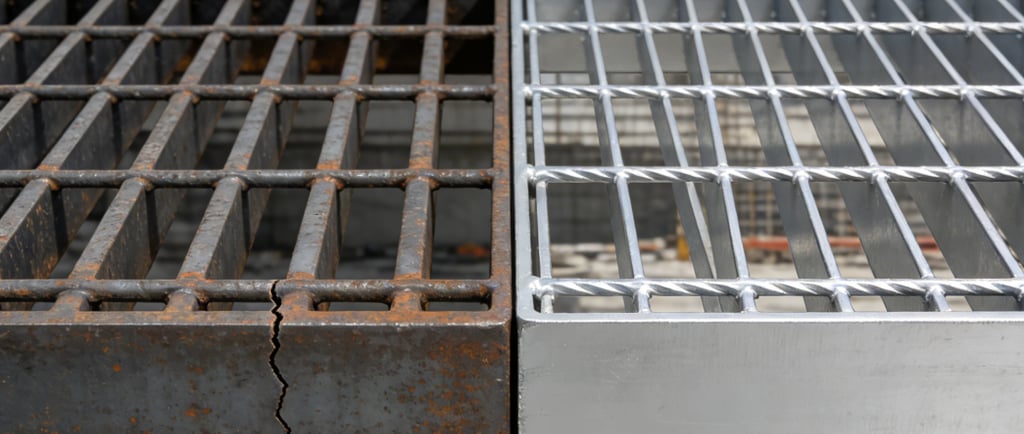
When selecting the right metal for grating, the choice hinges on application environment, load requirements, and corrosion resistance needs. There is no universal “best” option—each material excels in specific scenarios. Below is a revised, easy-to-follow breakdown of top grating metals, plus a Q&A section to address common questions.
1. Carbon Steel (Mild Steel)
Core Traits: The most cost-effective grating material with a high strength-to-weight ratio, making it ideal for heavy load-bearing tasks. It is easy to cut, weld, and fabricate on-site.
Ideal Use Cases: Indoor industrial settings like warehouses, factory floors, and equipment platforms—areas with minimal moisture or chemical exposure.
Limitations: Without a protective coating, it rusts quickly. Hot-dip galvanizing can add basic corrosion resistance for light outdoor use.
2. Hot-Dip Galvanized Steel
Core Traits: Carbon steel coated with a thick zinc layer via hot-dip galvanizing. This coating acts as a sacrificial anode, protecting the steel from rust even if scratched. It balances durability and affordability perfectly.
Ideal Use Cases: Outdoor walkways, drainage covers, parking garage ramps, and coastal areas with mild salt exposure. It is also a top pick for wastewater treatment plants.
Limitations: Not suitable for highly acidic or alkaline environments, as the zinc coating will degrade over time.
3. Stainless Steel (304 vs. 316 Grade)
Core Traits: A premium, low-maintenance option with outstanding corrosion resistance. Two grades dominate the grating market:
304 Stainless Steel: Resists mild chemicals, moisture, and urban outdoor elements. It is non-porous and easy to sanitize.
316 Stainless Steel: Contains molybdenum to boost resistance to saltwater, harsh acids, and industrial chemicals.
Ideal Use Cases:
304 Grade: Food processing plants, commercial kitchens, and hospital facilities (hygiene-critical areas).
316 Grade: Marine docks, coastal bridges, and chemical manufacturing plants.
Limitations: Higher upfront cost than carbon or galvanized steel; slightly lower load capacity than carbon steel of the same thickness.
4. Aluminum
Core Traits: The lightest grating metal (about 1/3 the weight of steel) with natural corrosion resistance—its surface forms a protective oxide layer when exposed to air. It is also non-sparking, making it safe for explosive environments.
Ideal Use Cases: Pedestrian rooftop platforms, aerospace facility walkways, and projects where weight reduction is a top priority.
Limitations: Not suitable for heavy vehicle traffic or high-load industrial applications due to lower strength.
Grating Metal Q&A (Common Questions Answered)
Q1: Which grating metal is the most budget-friendly for indoor use?
A: Carbon steel is the most cost-effective choice for indoor heavy-duty applications like warehouses and factories. It delivers high strength at a low price point.
Q2: What is the best metal for grating in coastal areas?
A: 316 stainless steel is the top choice. Its molybdenum content provides superior resistance to saltwater corrosion, outperforming galvanized steel in harsh marine environments.
Q3: Can aluminum grating be used for industrial loads?
A: No. Aluminum is best for lightweight, pedestrian-only applications like rooftop walkways. For heavy industrial loads, carbon steel or galvanized steel is a better option.

Get in touch
Address
ABZ industrial zone,Shenzhou,Hengshui City,Hebei Province,China.
Contacts
0086-18633908188
tony.buy@gmail.com