
Common Materials for Light Duty & Heavy-Duty Grating | Chinese Supplier Insights
As a professional Chinese grating supplier, we detail the most used materials for light duty and heavy-duty grating, their features, and application suitability to help global buyers make informed choices.
tonybuy
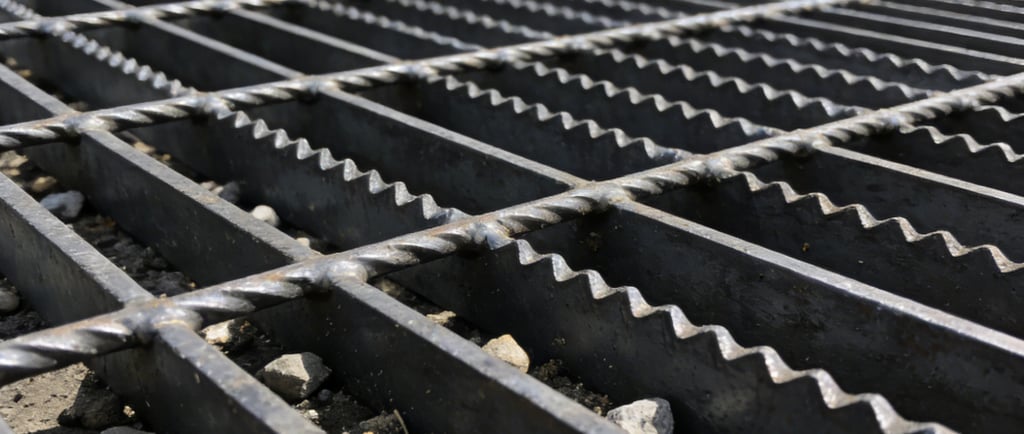
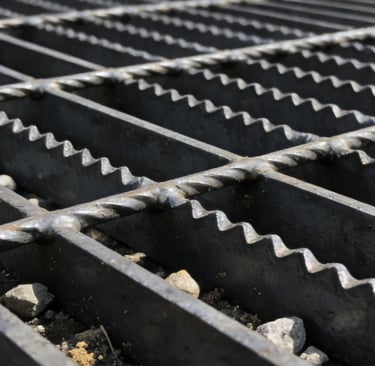
Grating materials directly determine load capacity, corrosion resistance, and service life. As a leading Chinese manufacturer with decades of experience serving global B2B clients, we summarize the most common materials for light duty and heavy-duty grating, along with their cost-performance advantages.
Common Materials for Light Duty Grating
Light duty grating focuses on lightweight, cost-efficiency, and basic structural strength. The most widely used materials are:
Low-Carbon Steel (Q235)
The most economical option for light duty grating. It is easy to weld and process, suitable for indoor dry environments like factory walkways, office building drainage covers, and stair treads.
Chinese suppliers usually add a cold-galvanized coating to enhance basic rust resistance, reducing maintenance costs for buyers.
Aluminum Alloy (6061/6063)
Lightweight (only 1/3 the weight of steel) and corrosion-resistant, ideal for outdoor light-load scenarios such as pedestrian bridges in coastal areas and decorative grating for building facades.
It is non-magnetic and has good thermal conductivity, making it a popular choice for clients with special environmental requirements.
FRP (Fiberglass Reinforced Plastic)
Non-conductive, corrosion-proof, and lightweight, perfect for chemical plants, sewage treatment plants, and other corrosive environments where light pedestrian traffic is expected.
Chinese manufacturers can customize FRP grating colors and grid sizes to meet different project aesthetic and functional needs.
Common Materials for Heavy-Duty Grating
Heavy-duty grating requires high strength and impact resistance to bear heavy loads. The core materials are:
High-Strength Carbon Steel (Q355)
A step-up from Q235, with higher yield strength and tensile strength. It is the standard material for heavy-duty grating used in ports, container yards, and heavy machinery workshops.
Most Chinese suppliers provide hot-dip galvanized treatment for Q355 grating, which can resist corrosion for 20+ years in outdoor harsh environments, meeting international anti-corrosion standards.
Stainless Steel (304/316)
Premium material with excellent corrosion resistance and strength. 304 stainless steel is suitable for heavy-load scenarios in mild corrosive environments, while 316 is ideal for coastal, marine, and chemical industrial heavy-duty applications.
Although the cost is higher, it has a longer service life and lower long-term maintenance costs, which is favored by high-end project buyers.
High-Strength Alloy Steel
Used for ultra-heavy-load scenarios such as highway bridge expansion joints, mine equipment platforms, and military engineering. It has ultra-high load-bearing capacity and wear resistance.
Chinese manufacturers can adjust the alloy ratio according to client-specific load requirements to achieve customized performance.
FAQ: Material Selection from Chinese Supplier’s Perspective
Q1: Which material is the most cost-effective for light duty grating in outdoor environments?
A: Cold-galvanized Q235 steel is the most cost-effective option for general outdoor light-load use. For coastal areas, aluminum alloy or FRP grating is a better choice to avoid frequent rust maintenance.
Q2: Can Chinese suppliers provide heavy-duty grating materials that meet international standards (e.g., ANSI, ISO)?
A: Absolutely. We strictly produce Q355 high-strength steel and 316 stainless steel grating according to ANSI A112.21.1M and ISO 14892 standards, with third-party certification reports available for buyers to verify.
Q3: What is the lead time difference between steel and FRP grating for Chinese suppliers?
A: Steel grating (light/heavy-duty) has a lead time of 7–15 days, depending on the order quantity. FRP grating requires 10–20 days due to its more complex molding process.
Why Choose Chinese Supplier’s Grating Materials?
Chinese manufacturers have a mature industrial chain, from raw material procurement to processing and coating. We can provide one-stop solutions:
For bulk orders, we offer competitive factory-direct prices without middlemen markup.
We support material customization, such as thickening the flat steel of heavy-duty grating or adding anti-slip serrations to meet special project needs.
All materials are tested for quality before shipment, with clear inspection reports provided to ensure compliance with buyer’s local standards.

Get in touch
Address
ABZ industrial zone,Shenzhou,Hengshui City,Hebei Province,China.
Contacts
0086-18633908188
tony.buy@gmail.com