
How to Choose the Right Industrial Grating: A Comprehensive Guide for Safety & Durability
Key Factors to Select Steel, Aluminum, Fiberglass, and Anti-Slip Grating for Your Project
11/26/20252 min read
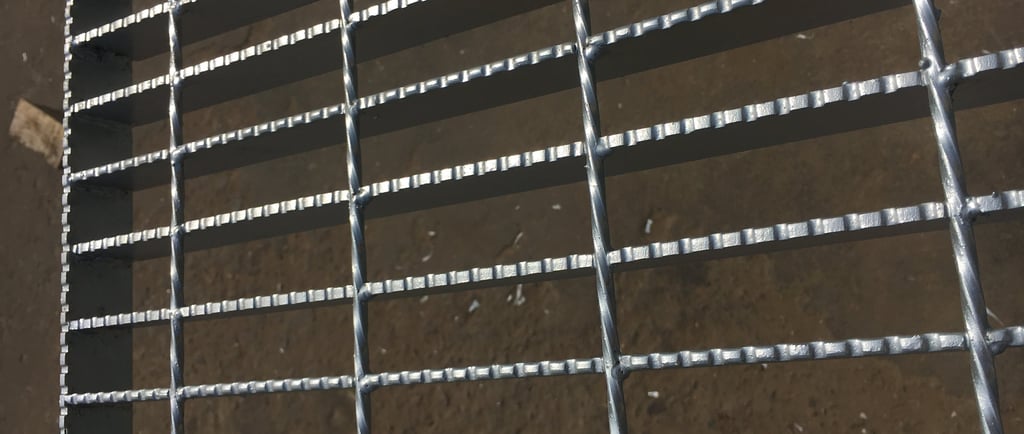
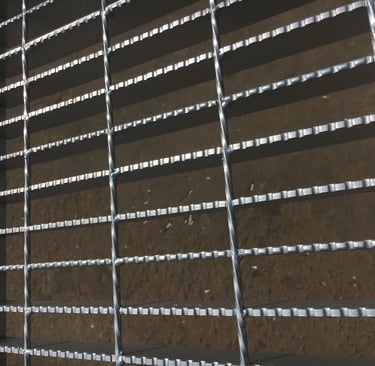
Industrial grating is the unsung hero of safe, efficient operations across factories, infrastructure, and commercial spaces. From walkways that withstand oily spills to trench covers supporting heavy machinery, the right grating boosts safety, cuts maintenance costs, and extends service life. But with options like steel, aluminum, fiberglass, and anti-slip variants, selecting the perfect fit can feel overwhelming. This guide breaks down the critical factors to match your project’s needs with the ideal grating type.
First, start with environmental conditions—the biggest driver of material choice. Corrosive environments like chemical plants, wastewater facilities, or coastal areas demand grating that resists rust and chemical erosion. Fiberglass grating (FRP) shines here: it’s non-conductive, impervious to acids and saltwater, and eliminates the need for regular rust treatment. Stainless steel grating is another strong contender, especially for food processing or pharmaceutical facilities where hygiene is paramount—its non-porous surface cleans easily and meets FDA standards. For dry, indoor spaces like warehouse mezzanines, mild steel grating offers cost-effectiveness without sacrificing strength.
Next, prioritize load-bearing requirements. A pedestrian walkway needs far less structural support than a loading dock grating handling forklifts or shipping containers. Heavy-duty steel grating, with thick bearing bars and reinforced joints, is the go-to for high-load areas like industrial platforms or mining sites—some variants support tens of tons. Aluminum grating, while lightweight, works well for weight-sensitive applications like rooftop solar access walkways, where it reduces structural strain without compromising on safety for technicians.
Safety is non-negotiable, so slip resistance deserves careful attention. Wet, oily, or high-traffic spaces—think refineries, stair treads, or commercial kitchens—require anti-slip grating. Serrated steel grating, with jagged bar surfaces that grip footwear, is ideal for industrial settings. For areas where chemical exposure is also a concern, anti-slip fiberglass grating combines traction with corrosion resistance. Even in milder environments, textured surfaces or grit-coated finishes can prevent accidents during rain or cleaning.
Don’t overlook installation and maintenance practicalities. Lightweight aluminum or fiberglass grating simplifies on-site installation, as it doesn’t require heavy machinery—critical for retrofits or temporary projects. Welded steel grating offers permanent stability but needs professional installation, while grating clips (no-weld fasteners) make adjustments or replacements easier. Maintenance-wise, fiberglass and stainless steel minimize upkeep: no painting, rust removal, or frequent repairs. Mild steel grating, by contrast, may need galvanizing or painting to extend its life in outdoor or damp areas.
Finally, align with project-specific needs like aesthetics or compliance. Architectural projects may call for polished stainless steel grating or colored fiberglass to match design schemes. Electrical utility areas require non-conductive fiberglass to eliminate shock risks. Always verify that your chosen grating meets industry standards—ISO 9001 for quality, OSHA for safety, or EN 124 for trench covers.
Choosing the right industrial grating boils down to balancing environment, load, safety, and practicality. By focusing on these key factors, you’ll select a solution that not only meets your project’s requirements but also reduces long-term costs and enhances operational safety. Whether it’s fiberglass for a coastal pier, anti-slip steel for a refinery stairwell, or aluminum for a solar roof, the perfect grating turns a functional component into a long-term investment.

Get in touch
Address
ABZ industrial zone,Shenzhou,Hengshui City,Hebei Province,China.
Contacts
0086-18633908188
tony.buy@gmail.com